What Is the Point of Cloud Seeding: The Science of Artificial Rain
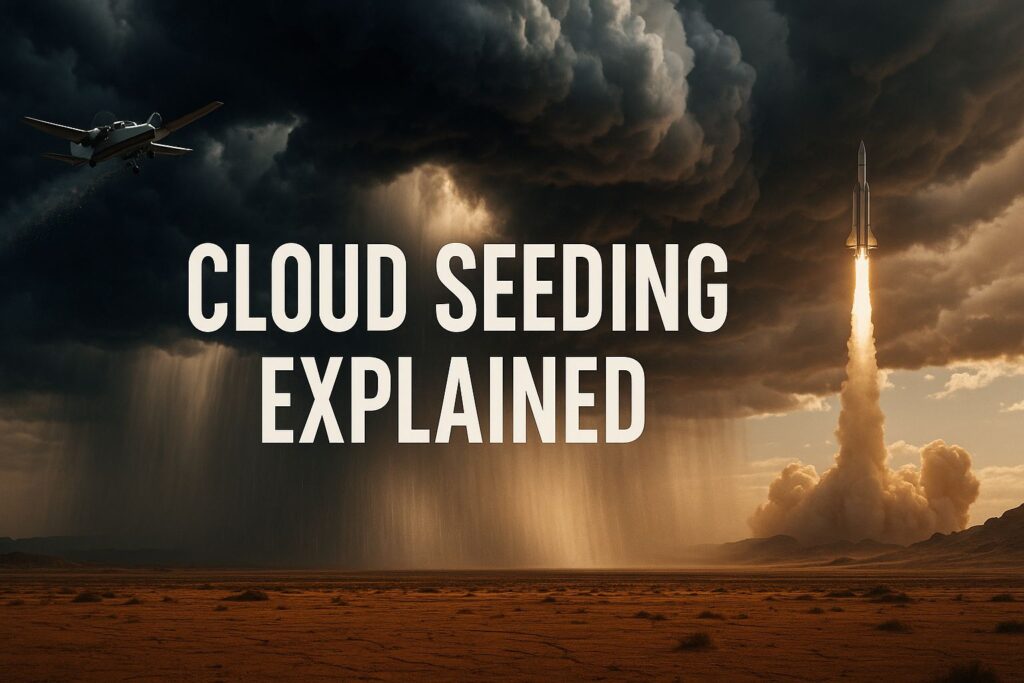
For centuries, humanity has dreamed of controlling the weather, a power once thought to belong solely to the gods. Yet, in an era of unprecedented technological advancement, this ancient aspiration is inching closer to reality. Cloud seeding, a fascinating and increasingly utilized weather modification technique, offers a glimpse into a future where we might indeed influence the skies above. This innovative approach aims to enhance precipitation in drought-stricken regions, mitigate severe weather events, and even clear fog for improved visibility. But how exactly does it work, and what are the implications of humanity’s growing ability to coax rain from the clouds?
Understanding the Sky’s Natural Processes
To grasp the mechanics of cloud seeding, it’s essential to first understand how clouds naturally form and produce precipitation. Clouds are essentially visible masses of water droplets or ice crystals suspended in the atmosphere. The process begins with water vapor, an invisible gaseous form of water, rising into the atmosphere. As this vapor ascends, the temperature drops, causing the water vapor to cool. This cooling leads to condensation, where the water vapor transforms into tiny liquid water droplets or, at colder temperatures, into ice crystals.
Crucially, for condensation to occur, these water vapor molecules need a surface to condense upon. In nature, these surfaces are provided by microscopic particles floating in the air, such as dust, pollen, and sea salt. These particles are known as cloud condensation nuclei. Without these nuclei, water vapor can remain in its gaseous state even at temperatures below freezing. Once these tiny droplets or ice crystals form and accumulate, they become visible as clouds.

Precipitation occurs when these minuscule cloud particles grow large enough to fall to the Earth’s surface. This growth happens through various processes. In warmer clouds, water droplets collide and merge, forming larger, heavier drops. In colder clouds, ice crystals grow by collecting supercooled water droplets (water that remains liquid below its freezing point) or by colliding and sticking together with other ice crystals. When these aggregated particles become too heavy to remain suspended, they fall as rain, snow, or hail, depending on the atmospheric temperature profile below the cloud.
The Accidental Discovery and Pioneering Methods
The concept of cloud seeding, like many groundbreaking discoveries, emerged from an unexpected observation. In 1946, Dr. Vincent Schaefer, an American chemist and meteorologist, was conducting research on aircraft icing and precipitation. During an experiment in a cold box, he exhaled into the frigid environment, observing the condensation of his breath into tiny water droplets ‒ essentially, a miniature cloud.
Intrigued, he decided to introduce a piece of dry ice (solid carbon dioxide) into the box. The result was astonishing: the water vapor instantly transformed into millions of microscopic ice crystals. Schaefer realized that the extreme cold of the dry ice had rapidly cooled the air, causing the water vapor to freeze and form ice crystals, mimicking the natural process of ice crystal formation in clouds but at an accelerated rate. This serendipitous moment marked the invention of cloud seeding using dry ice.

Almost concurrently, another scientist, Dr. Bernard Vonnegut, approached cloud seeding from a different angle. He focused on the critical role of condensation nuclei. Vonnegut theorized that if a more efficient surface for water vapor to condense upon could be introduced into clouds, precipitation could be enhanced. His experiments led him to discover that silver iodide possessed properties that made it an excellent condensation nucleus.
Silver iodide crystals have a crystalline structure similar to ice, allowing water vapor to readily freeze onto them, even at temperatures slightly above freezing. This led to the development of silver iodide cloud seeding, a method that involves dispersing fine particles of silver iodide into clouds to encourage the formation of ice crystals or water droplets. Both dry ice and silver iodide methods work by introducing substances that act as artificial nuclei, either by supercooling the cloud (dry ice) or by providing a structure for water molecules to attach to (silver iodide).
These ‘cloud seeds’ accelerate the natural processes of droplet or ice crystal growth, leading to increased precipitation. Initially, these materials were dispersed from airplanes, but over time, ground-based generators and rockets were developed to deliver the seeding agents more efficiently and cost-effectively.
Applications and Global Reach of Cloud Seeding
Since its inception, cloud seeding has been adopted by various nations and entities seeking to manage their weather and water resources. One of the earliest and most notable applications was in Thailand, where the Royal Rainmaking Project was initiated in 1955 to combat droughts and support agriculture. This program, which continues to operate today, has been recognized for its efforts in mitigating the effects of water scarcity.
Also Read: Mystery of the Bermuda Triangle: Truth Revealed
Beyond increasing rainfall, cloud seeding has found diverse applications. A prominent example is its use in preventing precipitation. By seeding clouds in surrounding areas days before a major event, the aim is to induce rain earlier, effectively depleting the clouds of moisture and preventing rainfall over a specific target area. This technique was famously employed by China during the 2008 Beijing Olympics to ensure clear skies for the opening ceremony. Conversely, China has also utilized cloud seeding to induce snowfall, as seen in Beijing in 2009 to alleviate drought conditions.

The United Arab Emirates has been one of the most active countries in advancing cloud seeding technology. Facing extreme arid conditions and limited freshwater resources, the UAE launched its National Center of Meteorology’s rain enhancement program in the 1990s. The country has experimented with both traditional methods, like silver iodide flares released from aircraft, and more recent innovations such as using drones to charge cloud particles with electricity. These techniques aim to maximize rainfall in the desert climate, reduce reliance on desalination, and secure long-term water sustainability for its growing population.
Another significant application is in mitigating severe weather phenomena. Cloud seeding can be used to reduce the size of hailstones, thereby minimizing damage to crops and property. Countries like Bulgaria have established national networks for hail protection, strategically deploying silver iodide rockets to control hailstorms. Similarly, cloud seeding can help disperse fog, particularly around airports, improving visibility and ensuring flight schedules remain uninterrupted. Ski resorts in various parts of the world also employ cloud seeding to ensure sufficient snowfall for their operations.
Globally, cloud seeding has been implemented in numerous countries, including the United States, Russia, Indonesia, the UAE, Saudi Arabia, Spain, and France. The United States, in particular, has a long history of cloud seeding experiments and operational programs, especially in Western states grappling with water scarcity. While the effectiveness of cloud seeding can vary depending on atmospheric conditions and the specific techniques employed, it remains a tool in the ongoing effort to manage natural resources and adapt to environmental challenges.
The Debate: Advantages, Disadvantages, and Ethical Considerations
Cloud seeding, while offering promising solutions to water scarcity and weather management, is not without its complexities and controversies. Proponents highlight several key advantages. Foremost among these is the potential to increase rainfall in drought-affected regions, providing much-needed water for agriculture, human consumption, and ecosystem health. It can also contribute to better water resource management and economic growth in arid areas. Furthermore, its ability to reduce the severity of hailstorms and disperse fog can prevent significant economic losses and enhance safety, particularly in aviation.

However, the technology faces considerable debate regarding its effectiveness, cost, and potential long-term impacts. Despite decades of research and application, the effectiveness of cloud seeding remains a subject of scientific discussion, with studies offering mixed results. While some studies suggest a 10-15% increase in rainfall, the inherent variability of weather patterns makes it challenging to definitively attribute increased precipitation solely to seeding efforts. The high operational costs associated with cloud seeding programs also raise questions about its economic viability as a widespread, long- term solution.
Perhaps the most significant concerns revolve around the potential negative effects on health and the environment. The introduction of substances like silver iodide into the atmosphere raises questions about their long-term ecological impact. While some research indicates no environmentally harmful effects from silver iodide aerosols , the long- term consequences of widespread and continuous application are still being studied. There are also ethical and legal questions surrounding artificial weather modification, particularly concerning who owns the weather and the potential for unintended consequences, such as altering weather patterns in downwind areas or impacting natural precipitation cycles.
Related: Uncovering science behind myths and weather phenomena
The possibility of a ‘rain theft‘ scenario, where one region’s increased precipitation comes at the expense of another, remains a contentious point. Despite these debates, advancements in cloud seeding technology continue. Researchers are exploring new seeding agents and more precise targeting methods to improve efficiency and minimize potential risks. The ongoing dialogue surrounding cloud seeding underscores the delicate balance between human intervention and the natural world, and the need for continued scientific inquiry and careful consideration of its broader implications.